
Technology settlements are changing the landscape. What states do next can shape the lives of young people for years.
Across the country, technology and social media companies are entering into settlements in cases alleging they caused harm to children’s health and well-being. The court-entered 2026 Meta youth social media consent judgment is one current example: it establishes major platform reforms and a ten-year payment structure while leaving important implementation questions to state law and state decision-makers. Together, these cases raise a larger question: how can these settlements be translated into lasting benefits for children, youth, and families?
NCYL letter to state attorneys general
Recommendations to state attorneys general on Meta settlement funds
NCYL’s letter to state attorneys general offers more specific recommendations for using Meta settlement funds to advance youth mental health and well-being. It addresses meaningful youth partnership, participatory budgeting, prevention and early intervention, school-linked care, digital literacy, peer support, equity, sustainability, and human-delivered mental health care.
Meta is one part of a much larger technology accountability story
Major technology settlements and court judgments show the scale and range of enforcement involving privacy, data practices, children’s rights, and online platforms. The 2026 Meta youth social media consent judgment pairs platform reforms with a ten-year payment structure, with state law shaping how funds are received and used. These cases offer opportunities to pursue greater accountability and stronger protections for young people.
$1.4 billion biometric privacy settlement
Texas resolved allegations that Meta unlawfully captured and used Texans’ biometric data through facial-recognition technology.
Source: Texas Attorney General
$1.375 billion privacy settlement
Texas resolved claims involving Google’s collection of location, incognito browsing, and biometric information.
Source: Texas Attorney General
$391.5 million location-tracking settlement
A coalition of 40 attorneys general resolved claims that Google misled consumers about location-tracking practices.
Source: Massachusetts Attorney General
$170 million children’s privacy settlement
The settlement addressed alleged COPPA violations and included both a civil penalty and compliance requirements.
Source: Federal Trade Commission
$25 billion civil-penalty judgment
A New Mexico court ordered Meta to pay $25 billion in civil penalties in the state’s Cambridge Analytica case after a jury found violations of consumer-protection law involving Facebook’s privacy and data practices. Meta has said it will appeal.
Sources: New Mexico Department of Justice; Meta’s announced appeal, reported by ABC News.
What should guide decisions affecting young people?
NCYL is not proposing a single spending formula or implementation model. The right approach will depend on the specific settlement terms, state law, the decision-makers involved, and the evidence available. But when opportunities arise to hold technology companies accountable and strengthen protections for young people, these are principles worth keeping in view.
Youth well-being
How will the decisions improve young people’s health, safety, development, education, and opportunities?
Equity
Which young people experienced the greatest harms, and who could be missed by a broad statewide approach?
Youth and family voice
How can young people and families inform decisions without placing the burden of solving the problem on them?
Accountability
What transparency and oversight should be built in? How can young people and families help monitor whether commitments are being met and whether implementation is producing the intended results?
Learning
What information will help states understand what is working, what is not, and what should change over time? What can states learn from one another as different approaches take shape?
Durability
What should remain stronger after the settlement period ends, and what should intentionally be temporary?
Six questions worth asking early
What do the terms require?
Separate what the settlement mandates from what it permits, and identify where state-level judgment actually exists.
Who has authority, and who should have a voice?
Map the formal roles of the attorney general, legislature, governor, agencies, courts, or other entities under the settlement and state law, while also identifying meaningful ways for harmed parties and the young people and families affected by these decisions to participate.
What harms and populations are most relevant?
Understand the connection between the case, the young people affected, and the systems or communities most closely tied to the alleged harms. Pay particular attention to young people involved in public systems, who may experience technology-related harms and access supports differently from the general population.
What evidence is already available?
Identify what the state already knows, where evidence is strong, where more information or expertise would be useful, and what can be learned from approaches already emerging in other states.
Whose perspective is needed?
Consider which public officials, experts, advocates, providers, young people, and families can help decision-makers understand the practical stakes, and whose perspectives are too often left out of the discussion.
How will the state learn over time?
Consider what transparency, evaluation, and feedback would help the state understand implementation and make better decisions as circumstances change. How can young people and families help set outcomes, assess impact, and chart the path forward?
Large recoveries do not determine their own impact
While tobacco and opioid settlements are not direct models for technology cases, their histories do show something important: what happens after a settlement can matter as much as the size of the recovery. Appropriations, transparency, implementation, and accountability can shape whether public dollars remain connected to the harms they were intended to address.
Tobacco settlements and taxes / FY2026
States expect to collect $21.7 billion from tobacco settlement payments and tobacco taxes in FY2026 and are spending $728.6 million on prevention and cessation programs. The lesson is that a large settlement does not, by itself, guarantee sustained investment in the problem that produced it.
Source: Campaign for Tobacco-Free Kids, Broken Promises to Our Children, FY2026. Last updated July 20, 2026.
Opioid settlements / 2021 onward
States and localities received more than $6 billion in 2022 and 2023. Roughly a third was spent or committed, roughly a third was reserved, and roughly a third could not be traced because many jurisdictions published no public accounting. That experience illustrates why transparency and public reporting deserve attention when states have discretion over implementation.
Source: KFF Health News, Johns Hopkins Bloomberg School of Public Health, and Shatterproof, opioid settlement spending database. Findings cover publicly reported spending in 2022 and 2023.
Meta youth social media consent judgment / 2026
The consent judgment establishes product reforms and state payments, but the legal and budget pathway for those funds is not identical everywhere. California has said a significant portion of its recovery will ultimately be directed by the Legislature and Governor. A September 2026 Kentucky Attorney General briefing likewise explains that Kentucky’s recovery moves through ordinary state budget statutes and that its General Assembly decides how the money is used. Understanding each state’s actual pathway is an essential first step.
Sources: Meta and State Attorneys General Consent Judgment, entered August 26, 2026; Kentucky Attorney General legislative briefing, September 15, 2026; California Attorney General settlement summary.
NCYL can be a thought partner, a technical assistance provider, and a programmatic partner
For more than 50 years, the National Center for Youth Law has worked at the intersection of children’s rights, public systems, policy, and the lived experiences of young people and families. As states consider how technology and social media settlement resources can benefit young people, NCYL can engage in more than one role, depending on the settlement terms, state law, and the needs of the state.
Help states and partners work through the questions
NCYL can bring legal, policy, systems, and youth-centered expertise to conversations about implementation, cross-system coordination, youth and family engagement, and learning across states.
Put resources to work for young people
Where settlement terms and state law permit, NCYL may also be eligible to receive direct support or partner on youth-serving legal, policy, research, technical assistance, or systems-change work aligned with a state’s goals.
Getting it right requires an integrated approach
Emerging technology raises related, but distinct, questions for young people
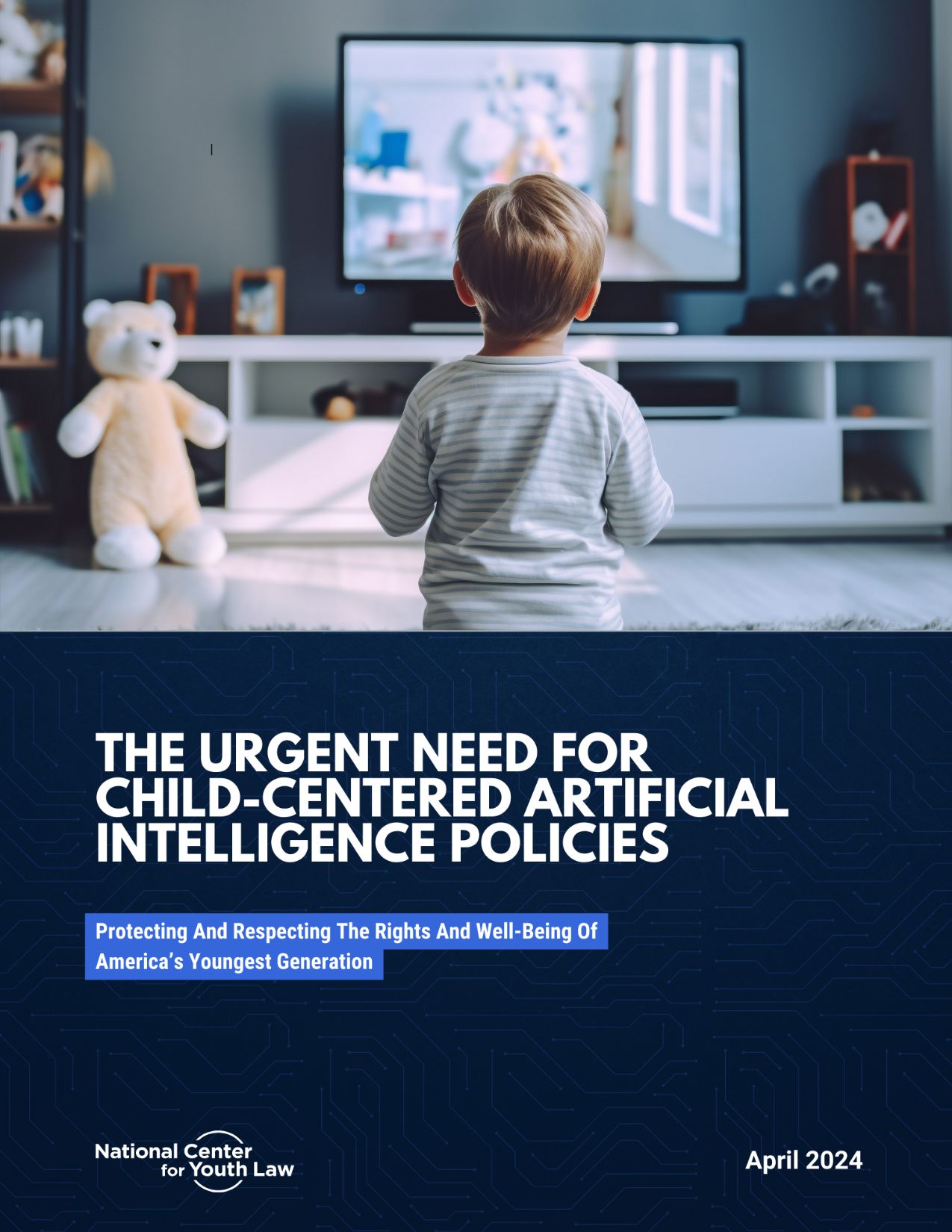
NCYL’s AI brief examines how artificial intelligence is affecting young people across public systems. Both AI and social media raise broader questions about children’s rights, safety, privacy, participation, and accountability.
Working through a technology or social media settlement?
If you are in an attorney general’s office, governor’s office, legislature, agency, advocacy organization, community group, or another institution thinking through these questions, NCYL would welcome a conversation. We are especially interested in connecting with state attorneys general and their teams about technical assistance, partnership, and opportunities to invest directly in work that benefits young people.