Promoting Healing in Child Welfare Advocacy: A Conceptual and Practice Framework
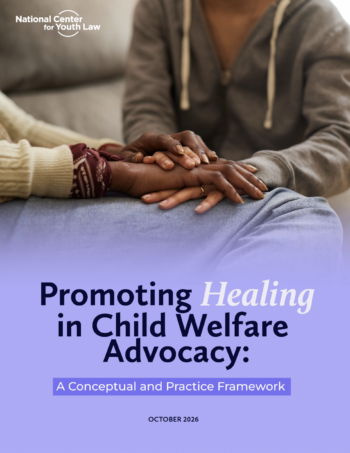
Healing is a right. Advocates can help make it real.
Lawyers and advocates often enter a family’s life at one of its hardest moments: an investigation, a removal, a court hearing. What we say and do then can make the harm deeper, or it can help a family begin to heal.
This framework is a call to action for legal advocates who represent children, youth and parents in family and juvenile court. It draws on interviews with practitioners, organizers, legal advocates and people directly affected by the child welfare system, and on a long tradition of healing work led largely by women of color. It looks at how the child welfare system causes harm through surveillance, investigation, family separation and shame. It then offers practical ways to put healing at the center of legal work.
Inside the paper:
- What harm and healing mean. Healing is defined broadly: personal, relational and collective, and grounded in connection, agency, imagination and repair.
- Naming systemic harm. It explains why child welfare interventions, even well-meant ones, often fail to promote safety or healing.
- Healing in the lawyer–client relationship. It covers core elements of healing that advocates can support, from protecting the connections that matter to clients to honoring culture, identity and self-determination.
- Beyond the individual case. It sets out strategies for policy change, for building a healing-centered culture inside legal organizations, and for “lawyers heal thyself.”
“Healing is not a dream for the future. It is a practice we build now.”